
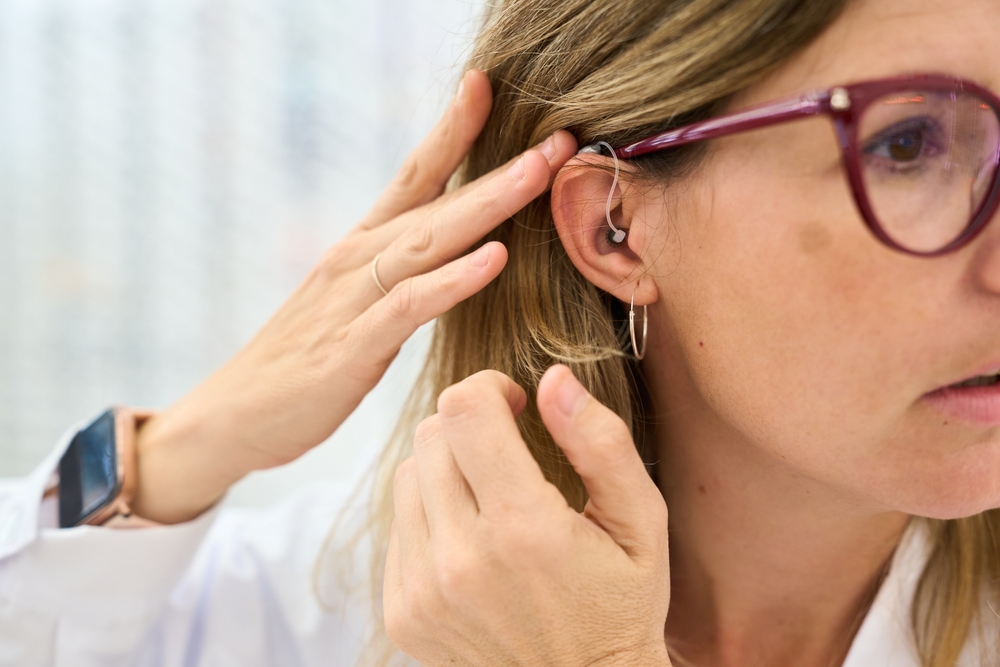
Many people put off getting hearing instruments for one simple reason: they picture something bulky, uncomfortable, and obvious. That worry makes sense if you’re picturing the devices of decades past. Plenty of patients have admitted they feared an ear-worn device would make friends and colleagues treat them as less capable of keeping up in conversation.
That outdated image is exactly why so many people keep putting off a simple hearing evaluation. But the reality has changed dramatically. Today’s hearing instruments are smaller, more comfortable, and far more discreet than most people realize — engineered with the kind of cosmetic care that makes the old stereotypes obsolete.
If it’s been years since you’ve seen an audiologist because you’re picturing an old-style device, it’s worth taking a fresh look at what’s available now.
Clearing Up the Old Stereotype
Ask someone to picture a hearing aid, and most will still describe something clunky and easy to spot from across a room — essentially, hearing aids from the 1980s and ’90s.
Since then, the entire industry has been reshaped by advances in miniaturized electronics, thoughtful industrial design, and digital sound processing. The result: devices that are dramatically smaller, sleeker, and built to disappear against your skin tone, hair, or ear shape rather than stand out.
Many current models sit entirely within the ear canal, making them essentially invisible during ordinary conversation. Others sit behind the ear but are so small and lightweight that they go unnoticed, especially once color-matched to the wearer.
A Quick Guide to Today’s Device Styles
Here’s a simple breakdown of the main form factors available now:
Invisible-in-Canal (IIC) The most discreet option available. Custom-molded to sit deep within the ear canal, IIC devices let you have a face-to-face conversation without anyone noticing you’re wearing one. They’re popular among people with mild-to-moderate hearing loss who want maximum cosmetic privacy.
Receiver-in-Canal / Receiver-in-the-Ear (RIC/RITE) The most widely used style today. A small unit sits behind the ear, linked by a thin, nearly invisible wire to a speaker inside the canal. Visually, they resemble sleek modern earbuds or Bluetooth accessories more than medical equipment — most people won’t notice them unless they’re looking closely.
Compact Behind-the-Ear (BTE) These house all the electronics in a casing that rests behind the ear, but today’s versions are far smaller than older models. They’re often the right choice for more significant hearing loss, delivering strong performance without the bulk people expect.
The bottom line: today’s hearing instruments are built to fit seamlessly into your life, not to announce themselves.
Beyond Looks: What Modern Devices Can Do
The improvements go well past appearance. Current hearing instruments function more like small personal audio computers than traditional medical devices. Many pair directly with your smartphone over Bluetooth, so you can stream phone calls, music, or TV audio straight to your ears — no separate headphones needed.
Most also come with a companion app, letting you adjust volume or switch listening settings from your phone rather than fiddling with the device itself. Walking into a noisy restaurant or crowded event? You can adjust directional microphone settings on the spot. And rechargeable lithium-ion batteries have largely replaced the tiny, short-lived zinc-air batteries of the past — just set your devices on a charger overnight, the same way you charge your phone.
Working Through the Emotional Side
Even with all these advances, hesitation is completely normal. Looking into hearing aids can feel like an emotional milestone, since it means acknowledging a change in your hearing — and that can bring up feelings of losing control over your own body.
It helps to reframe it: choosing a hearing device isn’t a sign of decline. It’s simply a tool for managing a natural part of life, the same way glasses or reading lenses are. Deciding to hear better is a proactive choice to take care of yourself and improve your day-to-day life.
Picture wearing a device that’s barely noticeable — and finally following conversations with ease, hearing clearly in crowded rooms, and staying present for the things you care about. That’s not a compromise. That’s taking back control.
See the Technology for Yourself
The fastest way to move past outdated assumptions is to see and try modern hearing technology in person. Stop by our office, ask your questions, and hold these devices for yourself — no pressure, no obligation. Consider it a chance to see firsthand just how light, comfortable, and cosmetically invisible today’s hearing instruments really are.
Most visitors are surprised by just how minimal and natural these devices feel once they try them. Don’t let an outdated mental picture keep you from better hearing — call our office or book your appointment online today.