
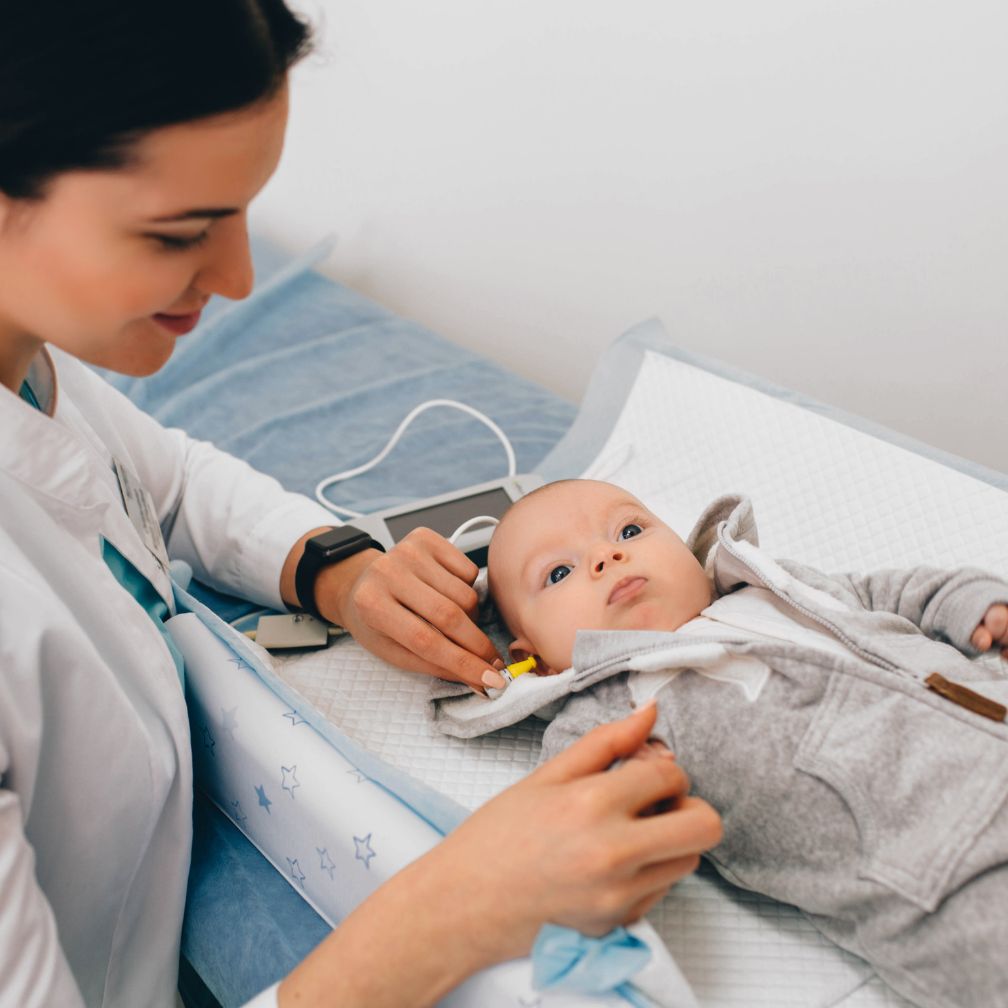
For guardians caring for an infant, understanding that their baby exhibits auditory deficits usually evokes immense internal anxiety. The positive takeaway remains that through the use of early evaluations and supportive care, infants experiencing hearing loss are able to excel. Without doubt, such infants can learn communication, interactive skills, and deep connections across their social world, bringing about a truly fulfilling life!
Two of the primary supportive devices for helping infants with hearing loss include custom hearing aids and cochlear implants. Further down, our article reviews their key operational details so you can select the proper choice for your baby.
Exploring Causes of Auditory Loss in Infants
Congenital auditory impairment in infants can develop due to specific root causes, such as:
- Distinct genetic variations (even within family trees devoid of hearing loss history)
- Documented prenatal viral exposures such as cytomegalovirus (CMV) or rubella
- Unexpected birth-related trauma, including neonate oxygen loss or premature delivery
- Specific intensive care medications applied in newborn intensive care facilities
What stands as the primary clinical priority? Prompt diagnostic confirmation. Consequently, infants in American medical centers receive auditory checks before heading home. Dedicated pediatric hearing clinicians consistently enforce the established “1-3-6” intervention timeline:
- Early auditory screening completed before 30 days of age
- Detailed comprehensive diagnosis established inside 90 days of life
- Medical intervention (incorporating corrective units or speech habilitation) commenced within 6 months
Reaching these target timelines offers infants optimal support for normal speech, expressive language, and intellectual growth. If you require additional direction regarding these testing procedures, your child’s pediatrician will gladly guide you!
Pediatric Hearing Aids for Young Babies
For young patients experiencing mild to severe hearing loss, wearable hearing aids routinely serve as the first line of treatment. These small, external hearing devices elevate sound intensity, assisting infants in capturing spoken communication and everyday acoustic cues more sharply.
Tailored infant hearing instruments serve as:
- Completely safe for application in newborns only several weeks old
- Designed with pliable, gentle custom molds that change as the child grows
- Furnished with secure battery housing closures and specialized pediatric safety components
- Professionally configured by a certified pediatric audiologist to target your child’s distinct hearing prescription
As your baby grows, their hearing devices must undergo periodic adjustments to guarantee proper physical fit and maximum performance.
Cochlear Implants for Infants
In cases where a child exhibits severe to profound sensorineural hearing loss and derives limited success from conventional hearing aids, a cochlear implant may be recommended. Differing fundamentally from conventional amplification tools, advanced cochlear implants:
- Are positioned within the inner ear through a surgical process bypassing non-functional outer hair cells
- Direct sound past non-working areas inside the cochlea
- Convert surrounding audio into precise electrical signals that directly activate the auditory nerve
Modern cochlear implant systems operate as:
- Granted official FDA clearance for children starting at 9 to 12 months old
- Deeply effective when paired with early speech intervention and consistent family involvement
- Recommended exclusively following detailed multi-disciplinary testing by a pediatric audiologist and ENT surgeon
This evaluative framework encompasses diagnostic imaging, detailed hearing tests, and realistic discussions regarding long-term developmental milestones.
Hearing Aids vs. Cochlear Implants: What’s the Difference?
- Mild to severe hearing loss: Hearing Aids; Severe to profound hearing impairment calls for Cochlear Implants
- Non-Invasive acoustic positioning: Hearing Aids; Invasive surgical procedure: Cochlear Implants
- Sound processing amplification: Hearing Aids; Direct conversion to electrical signals: Cochlear Implants
- Usage can begin in early infancy: Hearing Aids; Implantation starts at 9-12 months: Cochlear Implants
Concluding Guidance on Pediatric Hearing Technology
If your baby has been diagnosed with hearing loss, remember that proven treatment choices and plenty of support. Under the care of specialized pediatric hearing doctors, most children construct speech and language milestones fully matching their playmates.
Whether your youngster qualifies for external hearing aids or surgical cochlear implants, early intervention unlocks lifelong developmental success.
Have you got specific questions concerning your newborn’s hearing abilities? Contact our clinical team today to arrange a comprehensive evaluation and customized treatment program.